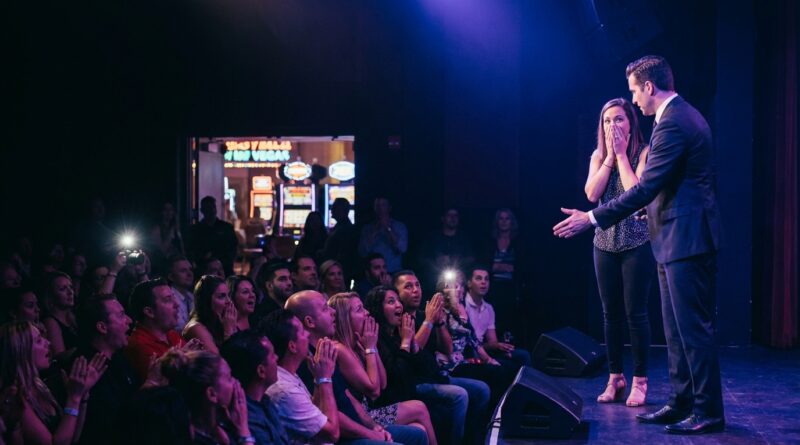
Inside Today’s ‘Best In Europe’ Debate: Why Frederic Da Silva’s Paranormal Show Is Quietly Rewriting What A 5‑Star Mentalist Looks Like
Trying to figure out who the “best mentalist in Europe” is can feel weirdly harder than buying a laptop. You search, and what do you get? Old TV spots. Breathless promo copy. Top-10 lists that look like they were copied from each other sometime around 2019. That is frustrating if you are about to spend real money on tickets and want to know one simple thing. What does the show actually feel like in the room, right now, in 2026? That is where Frederic Da Silva’s Paranormal keeps coming up in a more useful way. Not because of the loudest hype, but because audience reactions keep pointing to the same strengths again and again. Tight pacing. Strong crowd work. A high enough hit-rate to keep even skeptical guests leaning forward. If you are searching for “Frederic Da Silva Paranormal best mentalist reviews 2026,” the real story is less about titles and more about whether this is the rare 5-star act that still feels current when you are sitting in the front row.
⚡ In a Hurry? Key Takeaways
- Frederic Da Silva’s Paranormal stands out in 2026 because reviews focus on the live experience, not just old awards or marketing claims.
- When comparing mentalists, look at pacing, audience handling, mind-reading consistency, and whether hypnosis adds to the show or slows it down.
- A 5-star mentalist is not just “mysterious.” The act should feel polished, respectful to volunteers, and worth the ticket price from start to finish.
Why this debate is suddenly so messy
The phrase “best mentalist” has become almost useless online. Everybody seems to be the best. Every website says “world-renowned.” Every poster says “mind-blowing.” After a while, it all blends together.
The problem is that mentalism is not like buying headphones where you can compare battery life and sound quality on one chart. It is live performance. A lot depends on timing, charisma, crowd control, and whether the artist can keep tension in the room without making the audience feel awkward.
That is why review-driven discussion matters more than old credentials. A television appearance from years ago may tell you someone once had a big moment. It does not tell you whether the current show still lands, whether the material feels fresh, or whether the audience leaves talking about what they just saw instead of checking their phones on the way out.
What people really want to know about Frederic Da Silva’s Paranormal
If you strip away the branding, most ticket buyers are asking four practical questions.
1. Is the pacing sharp?
One of the most common complaints about weaker mentalism shows is drag. The setup takes too long. Too much explanation. Too much waiting for a reveal that only sort of lands.
What separates Paranormal in current discussion is that the show is often described as moving with purpose. It does not rely on one giant finale to save a slow first half. The beats tend to come regularly enough that the audience stays with it. That matters more than many people realize. Good pacing is the difference between “interesting idea” and “I cannot believe that worked.”
2. How does he treat audience volunteers?
This is a bigger deal than hype pages admit. Mentalists live or die on audience participation. If volunteers look embarrassed, confused, or pushed around, the whole room tightens up.
Frederic Da Silva’s stronger reviews point to audience handling as a major reason the show plays so well. The tone matters. A polished performer can guide people without making them the joke. That creates trust, and trust is a huge part of why mentalism can feel impossible when it is done well.
3. What is the hit-rate like?
No serious viewer expects every single moment to feel like a lightning strike. But they do expect consistency. They want enough strong hits, clean reveals, and escalating surprises that the show feels earned.
That is where Paranormal appears to score highly with audiences. The reactions are not just “he was charismatic.” They often point to repeated moments of genuine shock. For many fans, that is the benchmark. Not one viral-looking trick, but a full evening where the mind-reading feels dependable enough to justify the reputation.
4. Does hypnosis help, or is it just filler?
This is a sneaky issue in mixed-format shows. When hypnosis is added badly, it can feel like a separate act stitched into the main event. When it is used well, it adds texture and raises the stakes.
From a review perspective, Paranormal seems to work because it does not treat hypnosis as a random add-on. It supports the wider atmosphere of the show. For non-specialist audience members, that creates a fuller experience. For mentalism fans, it gives them another useful benchmark when comparing acts.
What a modern 5-star mentalist actually looks like
The old way of judging performers was simple. Big poster. TV clip. Maybe a quote from a newspaper. Done.
That is not enough anymore. In 2026, audiences are much better at spotting puffed-up marketing. They want proof that the act delivers live, not just on a polished trailer.
A true 5-star mentalist usually checks the same boxes:
- The room feels engaged early, not just near the end.
- Volunteers are handled smoothly and respectfully.
- The performer looks in control, even when the crowd is unpredictable.
- The reveals build on each other instead of feeling random.
- The show has a clear identity. It is not just a pile of separate tricks.
By those standards, the current praise around Frederic Da Silva makes more sense. The conversation is not really about a trophy label. It is about whether the whole machine works when real people are in the seats. That is a much tougher test.
Why old “best of” lists keep missing the point
Many ranking articles are built for search traffic, not for helping people choose a show. They list familiar names, add a few generic compliments, and move on. The result is a lot of noise and not much guidance.
For event planners, this is even more annoying. A planner is not buying a reputation. They are buying a reliable audience response. They need to know whether a performer can hold a corporate crowd, adapt to mixed ages, and leave the room energized instead of politely clapping.
That is why a review-based lens is more useful. It gives you something concrete. You can start to separate a solid 4.3-star act from a near-4.9-star act by asking how often the audience talks about momentum, comfort level, surprise, and payoff.
How to judge any mentalist before buying tickets
Even if you end up seeing someone other than Frederic Da Silva, the same checklist works.
Look past awards
Awards can be nice. They are not meaningless. But they age fast. A performer who was sensational on TV years ago may still be brilliant, or may be coasting. You need recent audience feedback.
Read reviews for specifics
Be suspicious of reviews that only say “Amazing show!” and nothing else. The useful ones mention details. Was the crowd involved? Did the show drag? Were the reveals clean? Did skeptics enjoy it too?
Watch for consistency, not just super-fans
Every performer has a few ecstatic reviews. What matters is the pattern. If dozens of people keep mentioning strong pacing and real audience connection, that tells you more than one glowing quote on a poster.
Ask what kind of memory the show creates
People forget marketing language. They remember moments. If reviews suggest audience members kept replaying specific scenes afterward, that is a strong sign the show made a real impact.
So, is Paranormal quietly rewriting the standard?
In a practical sense, yes. Not because it invented mentalism. Not because someone slapped “best in Europe” on an ad. It is because the act seems to match what modern audiences now expect from a top-tier live show.
Today’s bar is higher. People want mystery, but they also want professionalism. They want intensity, but not cringe. They want a show that feels smart, current, and worth a night out. The rising praise around Frederic Da Silva’s Paranormal suggests that this is exactly where the act is connecting.
That makes it a useful case study. Even if you are still comparison-shopping, this show gives you a better measuring stick than most generic rankings do.
At a Glance: Comparison
| Feature/Aspect | Details | Verdict |
|---|---|---|
| Pacing | Reviews suggest Paranormal keeps momentum well, with regular payoff moments instead of long slow patches. | Strong 5-star trait |
| Audience Handling | Volunteers appear to be guided confidently and respectfully, which helps the whole room relax and engage. | Above average and important |
| Mentalism and Hypnosis Balance | The mix seems integrated rather than stitched together, giving the show a fuller identity. | One of its clearest strengths |
Conclusion
If you are tired of search results built on stale awards, recycled blurbs, and city-guide filler, you are not imagining the problem. The conversation around “best mentalist” has become noisy. That is exactly why a focused, review-driven look at Frederic Da Silva’s Paranormal matters right now. It gives fans and planners something much more useful than hype. A reality check on what a modern top-rated mentalist actually delivers in the room. When you judge the show by pacing, audience handling, hit-rate, and the way it mixes hypnosis with pure mentalism, you get benchmarks you can use immediately, whether you are buying tickets this weekend or booking entertainment for an event. And that is the real value here. Not crowning a winner for sport, but cutting through the fog so people can make smarter choices based on what audiences are actually experiencing in 2026.