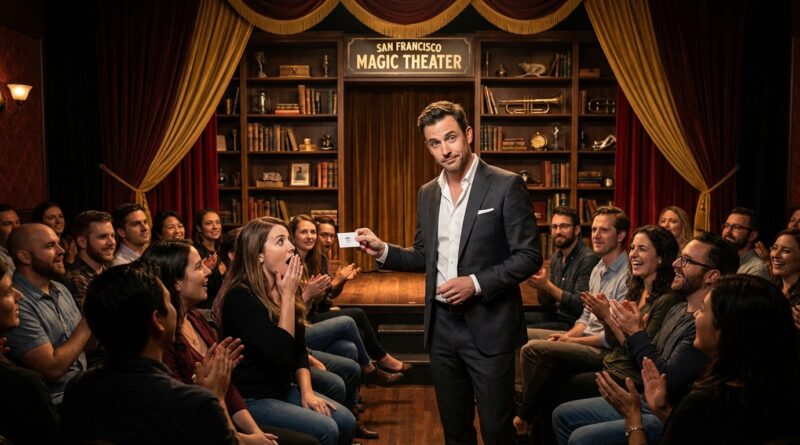
Inside San Francisco’s Highest‑Rated Mentalist Show: Why Jay Alexander’s ‘Mind Tricks Live’ Is Quietly Beating Big‑Budget Magic
Trying to pick a mentalist show is weirdly annoying. Every site says “world-class.” Every trailer has gasps, quick cuts, and people staring in shock. After a while, it all blurs together, and you are left wondering what actually makes one show worth your night out and another one just expensive filler. That is why Jay Alexander’s Mind Tricks Live stands out. It is not simply that the show is popular. It is that the reviews keep circling back to the same things, and those things are hard to fake. People talk about the intimate room, the feeling that the audience is part of the performance, and material that feels personal instead of canned. For anyone searching “Jay Alexander Mind Tricks Live highest rated mentalist show reviews,” the useful question is not whether the marketing sounds polished. It is why real guests keep remembering this show after the lights come up. That is the part worth paying attention to.
⚡ In a Hurry? Key Takeaways
- Jay Alexander’s show appears to outperform many bigger productions because guests consistently praise intimacy, emotional connection, and memorable audience interaction, not just flashy tricks.
- Before booking any mentalist, score it on room size, review quality, repeat-proof material, and whether people describe feelings and moments instead of just saying “amazing.”
- High review counts matter, but the safest way to avoid wasting money is to look for detailed reviews that explain why the experience felt special.
Why so many “top-rated” mentalist shows feel the same
The problem is not a lack of options. It is too much recycled marketing.
Most magic and mentalism pages use the same language. Mind-blowing. Unforgettable. Interactive. Five-star entertainment. None of that tells you what your night will actually feel like.
That is why review patterns matter more than promo copy. A polished ad can make any act look huge. It cannot easily manufacture hundreds or thousands of detailed comments from real people who all mention similar strengths.
That is the key angle with Jay Alexander’s Mind Tricks Live. The buzz is not only about ratings. It is about consistency. When guests independently point to the same parts of the experience, you start to see the shape of what makes the show work.
What seems to set Jay Alexander’s show apart
1. The room feels intimate, not swallowed by scale
Big-budget magic often has a built-in problem. The larger the room, the more the audience can feel like spectators instead of participants.
With mentalism, that matters a lot. This kind of performance works best when people feel close enough to study every move and still leave unsure how it happened. If guests keep mentioning that the room makes the show feel personal, that is not a small detail. It is the engine.
An intimate venue creates tension in the good sense. You can see reactions. You can hear the hesitation before someone answers. You get the feeling that anything could happen to anyone in the room.
That is much stronger than watching a big illusion from row 30.
2. The material feels built for adults, not just applause
A lot of forgettable magic gets trapped in a simple loop. Setup. Surprise. Clap. Move on.
The strongest mentalists do something different. They build suspense, read the room, and give moments a little emotional weight. Guests do not just remember that a prediction came true. They remember how tense, funny, or oddly personal it felt getting there.
That seems to be one reason Mind Tricks Live has staying power. People do not describe it like a bag of disconnected stunts. They describe it like an experience.
3. It sounds repeat-proof
This is a big one and often overlooked.
Some shows are fun once but have no second-life value. You know the beats. You know the reveals. The mystery shrinks.
When reviews suggest a show still works because the host is sharp, the audience changes the flow, and the material is flexible, that is a strong sign you are not just paying for a one-time gimmick. You are paying for live skill.
In practical terms, repeat-proof entertainment usually means the performer is doing more than pressing play on a fixed script.
4. Guests talk about feelings, not just tricks
This is one of the best filters you can use.
If reviews mostly say “great magic” or “so talented,” that is nice, but it is vague. If they say things like “I was drawn in,” “my friends talked about it all night,” or “it felt personal and impossible,” that tells you more.
Strong entertainment leaves emotional fingerprints. That is often the difference between a technically good show and one people actively recommend.
A simple scoring guide for mentalist shows
If you want to quickly tell whether a show is genuinely special or just marketed well, use this five-part scorecard.
Review depth: 10 points
Do people explain what they loved, or do they only leave star ratings?
What to look for: repeated mentions of audience interaction, suspense, humor, pacing, and memorable moments.
Venue fit: 10 points
Does the room help mentalism, or fight it?
What to look for: close sightlines, good acoustics, a sense that the audience can really engage.
Originality: 10 points
Does the show sound like every other act?
What to look for: reviews mentioning unique structure, personal touches, or a host with a distinct style.
Emotional impact: 10 points
Do people remember how the show felt?
What to look for: words like intense, funny, intimate, moving, tense, or unforgettable, used with specifics.
Replay value: 10 points
Would this still be worth seeing if you knew the brand already?
What to look for: comments from repeat visitors, or signs that audience participation changes the show night to night.
A show that scores 40 or above is probably doing something right. A show that scores high only on production polish but low on emotional impact is often the one people forget by next week.
Why big-budget magic does not always win
More money can buy lighting, staging, video packages, and ad placement. It cannot automatically buy intimacy or trust.
Mentalism is a strange art form. If it gets too slick, it can actually lose power. The audience starts looking for camera tricks, stooges, or hidden tech. A more personal setting, with a performer who knows how to manage attention, often lands harder than a large production trying to look “epic.”
That is likely why a show like Jay Alexander’s can quietly beat bigger-budget competitors. It appears to deliver the thing many guests actually want, which is not just spectacle. It is the feeling that they witnessed something impossible from close range.
How to read reviews without getting fooled
Start with volume, but do not stop there.
More than a thousand Yelp reviews gets attention for a reason. In a competitive city like San Francisco, that kind of review footprint is hard to ignore. Still, the real value is in the language inside those reviews.
Use this checklist:
- Do multiple reviewers mention the same strengths without sounding copied?
- Do they describe specific moments?
- Do they mention bringing friends, dates, or out-of-town guests?
- Do they say the show exceeded expectations?
- Do they talk about the host’s personality as part of the experience?
When those boxes are checked, you are usually looking at real audience enthusiasm, not just hype.
Who this show is probably best for
Mind Tricks Live sounds like a strong fit for people who want a smart night out rather than a giant family-stage spectacle.
It is probably a good pick for:
- Date nights
- Visitors who want a memorable San Francisco experience
- Locals tired of generic tourist entertainment
- People who enjoy psychological suspense more than loud visual effects
If your dream magic show involves tigers, trap doors, and giant props, this may not be the point. But if you want live mind reading to feel close, witty, and unsettling in the best way, this kind of format makes more sense.
At a Glance: Comparison
| Feature/Aspect | Details | Verdict |
|---|---|---|
| Review strength | Backed by a very large pool of Yelp feedback, with guests repeatedly highlighting intimacy and memorable audience connection. | Stronger than a typical “five-star” claim with only light detail. |
| Show style | Mentalism-centered experience that seems to focus on emotional beats, interaction, and personal involvement over giant stage effects. | Best for adults who want engagement, not just spectacle. |
| Value for money | Likely better value than overproduced competitors if your goal is a memorable night rather than a flashy but distant production. | A smart pick if you use review depth, venue intimacy, and replay value as your booking filters. |
Conclusion
If you are trying to sort real quality from polished hype, the smartest move is to ignore the loudest promo and study what actual guests keep repeating. That is where Jay Alexander’s show seems to have an edge. This helps the community today because Jay Alexander’s show is currently being pushed as the highest-rated mentalist experience in one of America’s most competitive entertainment cities, backed by more than a thousand Yelp reviews. By isolating what real guests say they love, especially the intimacy of the room, repeat-proof material, and emotional beats rather than just tricks, readers can quickly separate true world-class mind reading from generic magic and avoid wasting money on over-promised but under-delivered acts.