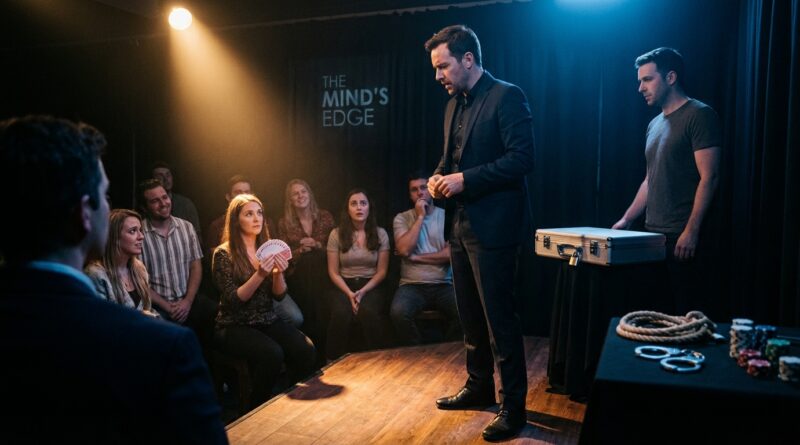
Inside 2026’s New ‘High‑Risk’ Mentalists: Why Reviewers Are Suddenly Obsessed With Dangerous Mind Reading Acts
It is easy to feel a bit fooled by modern mentalist marketing. Every poster promises danger. Every trailer hints at real jeopardy. Every review quote says “shocking” or “unmissable.” Then you buy a ticket and get ninety minutes of polished guessing games dressed up with spooky music. That gap is exactly why high risk mentalist show reviews 2026 have started to matter so much. Audiences are not just asking, “Is this good?” They are asking, “Does this actually feel risky in the room?” Fresh reviews over the last day suggest critics are rewarding shows that mix mind reading with escapology, gambling cons, pressure-based audience choices and moments that feel unstable enough to go wrong. The trick is knowing how to read those reviews without getting swept up by hype. Once you know what critics mean by danger, tension and control, it becomes much easier to spot the acts that offer real edge, not just better poster design.
⚡ In a Hurry? Key Takeaways
- “High-risk” in 2026 reviews usually means genuine tension, uncertain pacing and audience choices that seem to matter, not actual reckless danger.
- Look for reviews that mention crowd control, silence, hesitation and consequence. Those are better signs than generic words like “mind-blowing.”
- The best shows feel dangerous while still being responsibly managed. If a review praises safety and suspense together, that is usually a strong sign of value.
Why reviewers suddenly care about “risk”
People have seen enough slick tricks to know the basic rhythm. A setup. A reveal. A grin. Applause. Repeat.
What critics seem to be reacting to now is something less tidy. They are praising mentalists who build pressure instead of just showing skill. That can mean a prediction tied to a gambling scenario, an escape framed around time running out, or a psychological experiment where the volunteer appears to hold the power.
None of this has to be physically dangerous to feel dangerous. In fact, most of the strongest reviews are really talking about perceived risk. The audience believes something could fail. That belief creates the thrill.
That matters because many buyers still read the word “danger” too literally. In review language, it often means tension, uncertainty and stakes, not a performer casually taking stupid risks on stage.
What “high-risk” usually means in mentalist reviews
1. The outcome does not feel pre-packaged
When a critic says a show feels risky, they often mean the structure looks open enough that a wrong answer, a difficult volunteer or a missed cue could change the night.
That does not mean the performer has no plan. It means the plan is hidden well enough that the room feels live.
2. The volunteer matters
In weaker shows, audience helpers are props. In stronger high-risk acts, they feel like variables. Reviewers notice when a volunteer’s choice appears to steer the outcome, especially in routines based on lies, memory, pressure or trust.
3. Silence is part of the act
A surprising clue in many strong reviews is mention of pauses. Hesitation. Stillness. That is often where the tension lives. Fast, constant chatter can be entertaining, but it rarely feels dangerous. When a performer is willing to let a moment breathe, the audience starts leaning forward.
4. The show flirts with real-world consequences
Escapology themes, card-sharp scams, false deals, influence tests and high-pressure decision games all borrow the mood of situations where mistakes cost something. Critics love that because it gives mentalism a sharper edge than standard prediction tricks.
How to tell marketing copy from the real thing
This is where most ticket buyers get stuck. The trailer says “forbidden.” The poster says “extreme.” The website says “you will question reality.” Fine. But what do the reviews say?
Here is a simple filter.
Good signs in a review
If a reviewer mentions pacing, volunteer management, room tension, visible nerves in the audience, or routines built around trust and consequence, that is useful. Those details are hard to fake.
If they describe a specific sequence, such as a gambling demonstration where every choice seems to narrow the path, that tells you the risk was felt, not just advertised.
Weak signs in a review
If the review is mostly adjectives, be careful. “Amazing.” “Crazy.” “Unbelievable.” That is pleasant, but it does not tell you whether the act had real dramatic bite.
This is one reason pieces like Inside The New ‘Review‑Proof’ Mentalist: Why Alex McAleer’s Mind-Reading Shows Are Becoming 2026’s Quiet Obsession stand out. The useful reviews are not just cheering. They explain why a performance lands, and that is far more helpful when you are deciding where to spend your money.
The three review clues that matter most
Pacing
Risk lives or dies on pacing. If every effect lands with the same tone, the show starts to feel safe, even if the material sounds edgy on paper.
Look for critics noting a build. A slow rise in pressure. A sense that the room becomes more focused as the night goes on. That usually signals a performer who understands suspense, not just tricks.
Audience management
This one is huge. A good high-risk mentalist keeps volunteers safe, respected and central to the drama. Reviewers often notice when a performer can create intense moments without making people feel humiliated or cornered.
That is not a side issue. It is the skill. Any act can look “dangerous” if it is chaotic. The hard part is making it feel out of control while staying firmly in control.
Perceived risk
The best reviews often describe the audience feeling that something could slip. Maybe the volunteer changes their mind. Maybe the clock is running. Maybe a wrong read would collapse the whole sequence. Whether or not the performer has backup methods is beside the point. The crowd feels the drop.
That sensation is what buyers are chasing in 2026.
Why escapology, gambling scams and psychological risk are winning
These themes come with built-in stakes.
Escapology gives you time pressure. Gambling gives you consequences, deception and the thrill of beating the odds. Psychological risk gives you social tension. Will the volunteer crack? Will the performer push too far? Will the choice expose something private or embarrassing?
Again, the best acts use these ideas carefully. The point is not to frighten people for real. The point is to create a controlled shiver.
That is why these shows are being praised right now. They feel closer to live drama than to a magic recital. You are not just watching skill. You are watching a room negotiate uncertainty together.
How to pick a show that matches your appetite
If you want edge without discomfort
Look for reviews that praise suspense and control in the same breath. Words like “tense but playful” or “sharp without being cruel” are reassuring.
If you want the strongest possible tension
Search for mentions of prolonged silence, volunteer-led decisions, gambling structure, sealed outcomes or escape framing. Those usually point to a more nerve-jangling experience.
If you are going with friends or booking for a group
Pay close attention to how reviewers describe crowd participation. Some acts are thrilling for adventurous audiences but a poor fit for corporate groups, shy guests or mixed-age crowds. “Interactive” can mean many things.
What five-star mentalist reviews still miss
Even good reviews can skip one practical question. Who is this show actually for?
A five-star review from a critic who loves pressure-heavy theatre may not help a casual ticket buyer who just wants a clever, fun night out. The reverse is also true. A family-friendly rave may undersell an act that serious mentalism fans would find thrilling.
So when reading high risk mentalist show reviews 2026, do not just ask whether the critic liked it. Ask what kind of risk they are describing. Emotional? Social? Physical-looking? Psychological? That one distinction can save you from booking the wrong night.
At a Glance: Comparison
| Feature/Aspect | Details | Verdict |
|---|---|---|
| Perceived danger | Reviews mention tension, consequence, uncertainty and moments that seem able to fail in public. | Strong sign of a genuinely edgy act. |
| Audience management | Critics note respectful handling of volunteers, clear control and suspense without humiliation. | Best marker of quality and professionalism. |
| Marketing versus detail | Generic praise tells you little. Specific notes on pacing, silence, gambling or escapology tell you much more. | Choose detailed reviews over flashy promo language. |
Conclusion
The useful shift in the last 24 hours is not just that critics are praising riskier mentalism. It is that they are giving us better language for judging it. That helps the community right now because ticket buyers have been stuck with vague “danger” claims and very little way to tell real tension from polished sales copy. Once you start watching for pacing, audience management and perceived risk, the picture gets clearer fast. You can spot the modern five-star mentalists who trade in suspense instead of noise, and you can avoid booking a show that sounds wild but plays it completely safe. For anyone thinking about a night out, a group booking or even travel for a headline act, that framework is the real value. It makes it much easier to find the kind of high-stakes mind reading experience you actually want.