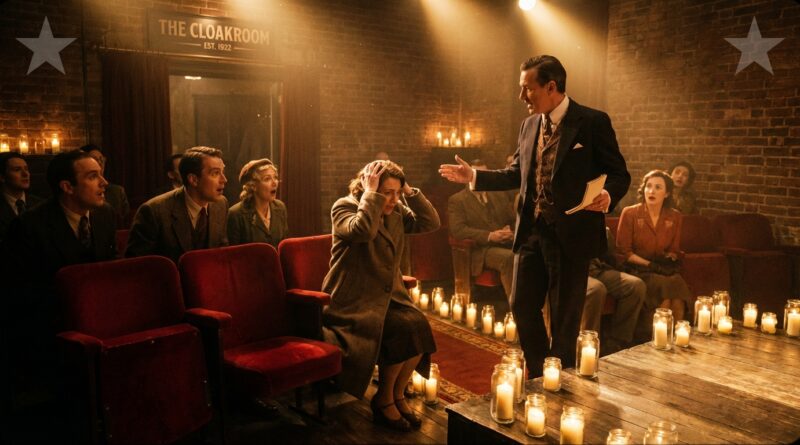
Inside 2026’s New ‘Cult Favorite’ Mentalists: How Under‑the‑Radar Mind Readers Quietly Become The Highest‑Rated Acts In Town
You search for a mentalist, and the same thing keeps happening. The results look impressive at first. Big promises. Fancy posters. “World-class” everywhere. Then you open the reviews and it gets messy fast. Some are glowing. Some call it a tourist trap. Some sound fake. Meanwhile, the people locals quietly rave about are harder to find, tucked into small theaters, hotel lounges, comedy rooms, and private clubs with almost no press at all. That gap is real in 2026. The biggest names often get the biggest placement, not always the best audience scores. The performers earning the strongest word-of-mouth are often the ones working 40- to 80-seat rooms, building loyal followings one sold-out night at a time. If you want the highest rated mentalist shows near me, you need a better filter than billboards, listicles, and search ads. The good news is that the clues are already sitting in plain sight on Google, TripAdvisor, Yelp, and venue pages.
⚡ In a Hurry? Key Takeaways
- The best-rated mentalists are often not the most famous ones. Small-room performers with consistent recent reviews can be a better bet.
- Start by checking review quality, venue size, and how recent the praise is. Do not trust star ratings alone.
- If reviews mention hard sells, distracted crowds, or “better for tourists,” save your money and keep looking.
Why the “best” mentalist is often not the one you keep seeing advertised
Search engines love familiar names. So do travel guides, ticket brokers, and entertainment blogs chasing clicks. That means the same celebrity mentalists keep floating to the top, even when local audiences are giving stronger scores to quieter acts down the list.
This is not because the famous names are bad. Some are excellent. The problem is that fame and audience satisfaction are not the same thing. One performer may fill a large room on name recognition. Another may fill a much smaller room because every guest leaves saying, “You have to see this person.”
That second type is where the cult favorites live.
What “cult favorite” really means in 2026
It does not mean obscure for the sake of being obscure. It means a performer who has not broken into the big press cycle yet, but is already getting unusually strong reactions from real paying audiences.
These mentalists usually share a few traits:
- They play intimate rooms where audience interaction feels personal.
- They have a high number of detailed five-star reviews, not just quick one-line ratings.
- Their tickets often sell out faster than their public profile suggests.
- Their reviews mention surprise, warmth, humor, and audience connection, not just “good tricks.”
If you have been frustrated trying to sort hype from reality, this is the pattern to watch.
How to find the highest rated mentalist shows near me without getting burned
1. Start with recent reviews, not lifetime averages
A 4.8 rating sounds great until you notice most of those reviews are from two years ago. Live performance changes fast. Venues change. Material changes. Crowds change.
Look for performers with strong reviews from the last 90 to 180 days. If a mentalist has 30 recent reviews and they are still averaging near-perfect scores, that tells you much more than an old mountain of ratings.
2. Read the words, not just the stars
This is where most people stop too early. A five-star score matters, but the wording matters more.
Good signs include phrases like:
- “Everyone was talking about it after the show”
- “I was picked and it felt real, not staged”
- “Small room, amazing energy”
- “We booked again”
- “Worth planning a night around”
Red-flag language includes:
- “Good if you are already nearby”
- “A bit overpriced for what it was”
- “Felt scripted with planted audience members”
- “Too much crowd management, not enough magic”
- “More hype than substance”
If the reviews sound vague, repetitive, or suspiciously polished, be careful.
3. Cross-check the venue size
This is the part most people miss. A mentalist pulling a 4.9 across multiple platforms in a 60-seat room is often creating a very different experience from someone doing a broad, less personal show in a giant tourist venue.
Small rooms can create stronger reactions because the experience feels close-up, direct, and personal. When those rooms keep selling out, it often means the performer is delivering the kind of show people tell friends about immediately.
If you want a useful benchmark, ask yourself this: is the performer earning great reviews because they are famous, or because nearly every person in a small room walks out thrilled?
4. Compare Google, TripAdvisor, Yelp, and the venue site
Do not rely on one platform. Each one has blind spots.
- Google is usually best for volume and recency.
- TripAdvisor is useful in tourist-heavy cities, but can overfavor heavily marketed attractions.
- Yelp often gives better detail on service, room setup, and overall night-out value.
- Venue sites can confirm whether shows are actually selling out or just claiming to.
If all four line up, you are onto something. If one site is glowing and the others are lukewarm, slow down.
The review pattern that usually signals a truly elite local mentalist
The sweet spot is not always the highest raw rating. It is the strongest mix of consistency, detail, and credibility.
Here is a pattern worth trusting:
- 4.8 to 5.0 ratings across more than one platform
- Reviews spread over time, not dumped in a short burst
- Comments about audience interaction that sound specific
- Mentions of repeat visits or referrals
- Photos of real crowds in intimate venues
That combination usually beats a flashy show with lots of ad spend and mixed feedback.
Why small venues are quietly producing the best mentalism right now
Mentalism works best when the audience feels close to the action. A thought reveal hits harder when you are ten feet away, not fifty. A prediction feels more impossible when the room is small enough that people feel they would spot anything fake.
That is one reason under-the-radar acts are doing so well. They are not trying to scale too fast. They are protecting the one thing that matters most in this kind of show: trust between performer and audience.
If this trend sounds familiar, it fits with what we saw in Inside 2026’s New ‘Sell‑Out’ Mind Readers: How Five‑Star Mentalists Are Quietly Turning Regional Theatres Into Global Phenomena. The pattern is the same. Smaller rooms are becoming launchpads for bigger reputations, and audiences are catching on before mainstream press does.
How to spot fake buzz versus real momentum
Fake buzz usually looks like this
- Lots of generic praise with no detail
- Big marketing language but weak audience photos
- Heavy ad presence with little local conversation
- Review spikes that do not match the show schedule
- Comments that sound copied or strangely formal
Real momentum usually looks like this
- Guests naming favorite moments
- Venue staff and locals recommending the show
- Ticket scarcity that shows up repeatedly
- Reviews mentioning friends, dates, birthdays, and return visits
- Strong ratings across multiple months, not just opening week
That difference matters. Real momentum is harder to fake because it shows up everywhere, not just where the marketing budget pushes it.
A simple 5-minute search method that works
If you want the highest rated mentalist shows near me, use this quick process:
Step 1
Search your city plus “mentalist,” “mind reader,” and “psychological magic.” Do not use only one term.
Step 2
Open the map results and ignore ads at first. Save five to eight names.
Step 3
Check Google reviews. Focus on recent comments and detailed wording.
Step 4
Cross-check TripAdvisor and Yelp for the same names.
Step 5
Visit the venue page. Look for room size, dates, sold-out notices, and repeat bookings.
Step 6
Drop any act with review red flags, stale ratings, or comments about overpricing and touristy presentation.
That quick filter will usually leave you with two or three serious contenders. Those are the ones worth your money.
What reviewers often say about the best shows
The strongest mentalist reviews rarely focus only on mystery. They talk about the full experience. People mention laughter, surprise, pacing, and the feeling that the performer connected with the room instead of performing at it.
That is important because a great mentalism show is not just about fooling people. It is about making them feel included, seen, and slightly off-balance in the best possible way.
When reviews keep returning to that feeling, pay attention.
At a Glance: Comparison
| Feature/Aspect | Details | Verdict |
|---|---|---|
| Big-name advertised shows | Easy to find, heavily promoted, often mixed review quality and broader crowd appeal | Good for convenience, not always the best-rated experience |
| Small-room cult favorites | High recent ratings, detailed audience comments, stronger word-of-mouth, limited seats | Often the smartest pick for quality and value |
| Review platform checks | Google shows recency, Yelp adds detail, TripAdvisor helps in tourist areas, venue pages confirm demand | Use all of them together before booking |
Conclusion
The gap between hype and reality is getting wider, and that is exactly why smart audiences need better tools. Streaming hits, Vegas billboards, and algorithm-driven lists keep recycling the same celebrity names, while some of the genuinely best-reviewed mentalists are building loyal followings in small rooms and selling out through pure word-of-mouth. If you know how to filter review platforms, compare star ratings against venue size, and spot warning signs in audience comments, you can find elite mind reading in your own city without wasting money on a mediocre night out. That is the real value here. Not more hype, just a better way to look. And for readers who want to stay ahead of the curve, Best Mentalist is becoming the place where these low-profile standouts show up before the bigger entertainment sites catch on.