How to Choose a World‑Class Mentalist for Your Next Night Out (Without Getting Fooled by Fake Hype)
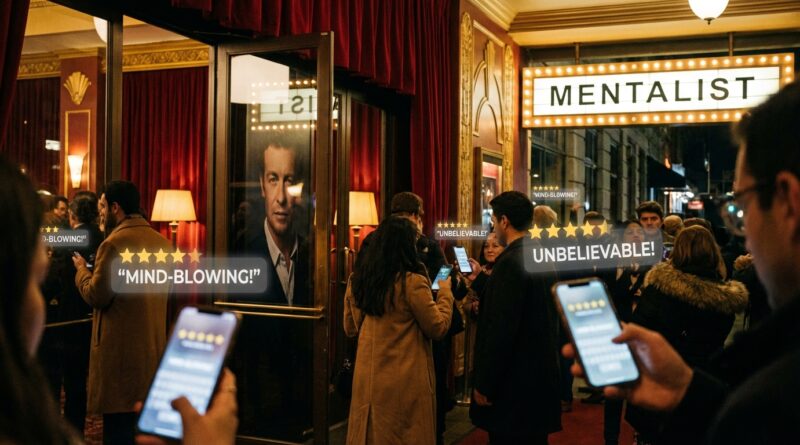
Picking a mentalist for a big night out should be fun. Instead, it often feels like a trap. You see polished clips, dramatic reaction shots, and wall-to-wall five-star praise, but none of that tells you whether the show will actually be sharp, surprising, and worth your money. That frustration is real, especially if you are planning a date, celebrating with friends, or booking something you want people to talk about for the right reasons. The good news is that you do not need insider knowledge to sort the truly great performers from the overhyped ones. If you know how to read best rated mentalist show reviews properly, you can spot the difference between a world-class act and a slick promo machine. The trick is to look past the glitter and focus on what audiences actually say about consistency, originality, audience connection, and whether the mystery still lands live, not just on Instagram.
⚡ In a Hurry? Key Takeaways
- Do not trust star ratings alone. Read for details about audience interaction, pacing, originality, and whether the show felt strong in the room.
- Look for review patterns across Google, ticketing sites, Reddit, and local press, not just a performer’s own social feeds.
- If the marketing is huge but the feedback is vague, repetitive, or weirdly generic, save your money and keep looking.
Why glowing reviews can still lead to a disappointing night
This is the part that catches people out. A mentalist can have fantastic branding and still deliver a pretty average show. Slick trailers help. Professional photos help. A short clip of a stunned audience member helps even more. None of that proves the full show is great.
Mentalism is especially hard to judge from marketing because the whole art form is built around surprise, tension, and reaction. A good 20-second reel can make an ordinary act look world-class. That is why reviews matter. But only if you read them the right way.
The search term most people end up using is something like best rated mentalist show reviews. That is a good start. The problem is that many readers stop at the star average. They should not.
Start with the reviews, but do not stop at the number
What a useful review looks like
A review worth trusting usually includes specifics. It mentions what kind of crowd was there. It says whether the performer connected with the audience. It might talk about pacing, humor, suspense, or how involved people felt. The best reviews often describe the emotional effect without giving away the method.
Useful examples sound like this:
“He made the whole room feel part of it, not just the people on stage.”
“It was funny, fast, and somehow still intimate.”
“I expected a few tricks. What I got was a full show with a real story and constant surprises.”
That kind of language tells you the performance worked as a live experience, not just as a visual stunt.
What a suspicious review looks like
Be careful with reviews that are all heat and no detail. If every comment says some version of “Amazing. Must see. Best ever,” that is not very helpful. It may be real, but it does not help you judge quality.
Watch for these red flags:
- Lots of short, nearly identical five-star reviews posted close together
- No mention of the venue, crowd, or style of show
- Language that sounds copied from the performer’s website
- Praise focused only on looks, vibe, or social media presence
- No balanced comments at all, even in a large sample size
A truly strong performer usually has enthusiastic reviews with texture. Different people notice different things. That is normal. In fact, it is a good sign.
Learn the difference between storytelling and actual skill
Here is where many people get fooled. A world-class mentalist does not just create mystery. They control a room. They manage timing. They know how to involve spectators without awkwardness. They build tension and release it at exactly the right moment.
Some acts rely heavily on dark lighting, dramatic music, and serious narration. That can be entertaining. But atmosphere is not the same thing as technical excellence.
Ask yourself this when reading reviews:
- Did people talk about the performer’s presence, or only the mood of the room?
- Did audience members feel included, or were they mostly watching from a distance?
- Did the show sound memorable because it was mysterious, or because it was genuinely smart, surprising, and well-structured?
The best acts usually combine both. Strong technique. Strong storytelling. Strong audience handling. If one part is missing, the whole thing can feel thin.
Check more than one platform
If all the praise lives in one place, be careful. A better test is consistency across different sources.
Where to look
- Google reviews
- Ticketing platforms
- Venue pages
- Local entertainment listings
- Reddit threads and local Facebook groups
- Press reviews from arts writers or event editors
You are not just looking for a high score. You are looking for the same strengths showing up again and again. If one reviewer praises the interaction, another mentions the same thing, and a third says the performer kept the whole room engaged, that pattern matters.
If you are planning something more social or immersive, it also helps to understand what makes interactive entertainment actually click in a live setting. A useful example is How to Turn Interactive Mentalism Into the Most Talked‑About Experience in Your City, which gets into why audience involvement can make or break the night.
Look for signs of a real live performer, not just a good content creator
Some mentalists are excellent on camera. That does not always mean they are excellent on stage. Social media rewards short bursts. Live performance rewards structure, stamina, adaptability, and connection.
Good signs
- Reviews mention different venues and different types of crowds
- The performer has a track record over time, not just one viral moment
- Audience comments mention consistency, not just one killer effect
- There are candid clips, not only heavily edited highlights
- The show description is clear about format, length, and style
Bad signs
- Everything is based on reaction videos with no sense of the full show
- The biography makes huge claims but gives little proof
- Every image looks like an ad, with no real event context
- The act is sold as “mind-blowing” over and over, but nobody explains why
This is not about being cynical. It is just smart buying. You would not book a hotel from filtered photos alone. Same idea.
Pay attention to how the audience was treated
This matters more than people think. Great mentalists know how to involve spectators without embarrassing them. The best ones make volunteers feel safe, interesting, and part of the magic.
Bad or mediocre performers often get cheap laughs by putting audience members on the spot. Reviews will usually hint at this. Words like “awkward,” “cringey,” or “a bit uncomfortable” should make you pause.
On the other hand, if people say things like “he was warm,” “she made everyone feel included,” or “the volunteers looked like they were having a blast,” that is a very good sign.
For a date night or group outing, audience handling is not a small detail. It is the difference between a night you rave about and one you laugh off politely on the way home.
Do not confuse fame with fit
Some famous acts are excellent. Some are simply famous. You are not buying a brand. You are buying an evening.
The right mentalist for your night out depends on the kind of experience you want:
- Intimate and clever for a date night
- Fast, social, and funny for a group outing
- Dramatic and theatrical for a special occasion
- Interactive and buzzy for a city night with friends
A “world-class” mentalist does not just impress people. They fit the room, the crowd, and the mood. Reviews that mention this clearly are worth much more than generic star counts.
A simple checklist before you book
- Read at least 15 to 20 reviews, not just the top three
- Check at least two independent platforms
- Look for repeated praise about audience connection and consistency
- See whether reviewers describe a full experience, not just one shocking moment
- Make sure the show style matches your night out
- Be wary of vague hype and overproduced reels without substance
If a performer clears those tests, your odds of a great night go way up.
At a Glance: Comparison
| Feature/Aspect | Details | Verdict |
|---|---|---|
| Review Quality | Specific comments about pacing, interaction, originality, and crowd response are far more useful than vague five-star praise. | Trust detailed reviews over high averages alone. |
| Social Media Presence | Strong reels and reaction clips can help, but they only show edited highlights, not the full live experience. | Useful as a preview, not proof of world-class quality. |
| Audience Experience | The best mentalists involve spectators well, avoid awkwardness, and leave people talking about the whole night, not one stunt. | One of the clearest signs of a top-tier performer. |
Conclusion
The current boom in mentalism is exciting. Streaming thrillers, clever live shows, and word-of-mouth buzz have made more people curious about the art than ever. But buzz attracts copycats too. That is why it pays to slow down and read best rated mentalist show reviews with a sharper eye. When you look past generic hype, separate theatrical mood from real skill, and notice red flags in how reviews are written, you give yourself a much better shot at booking a night that actually feels special. Better still, you help reward the performers who are doing the hard work of raising the standard. That is good for your wallet, good for your evening, and good for the future of mentalism as a live art worth seeing.